Things to Do in Kütahya: A Travel & Thermal Holiday Guide
Things to do in Kütahya, how to get there, when to go, and where to stay for a thermal holiday — tiles, Aizanoi, Kütahya Castle and the Yoncalı spas in one guide.
Kütahya: A City of Tiles, Healing Waters and Calm
Where the inner Aegean meets central Anatolia lies Kütahya — a city most travellers assume they are simply “passing through”, while in fact missing a place worth staying for days. It is known for its world-famous ceramic tiles (çini), for a history stretching from the Phrygians to the Ottomans, and perhaps most of all for the thermal waters people have come to for healing for centuries. Being just a few hours from Ankara, Istanbul, Izmir and Bursa makes it discoverable without needing a long holiday — it even fits into a weekend. In this guide we have gathered, in plain language, what to see in Kütahya, how to get there, and how to plan a thermal break.
How to Get to Kütahya
Kütahya is easily reached by road from most major cities in western Turkey. It is roughly a three-hour drive from Ankara, two and a half hours from Bursa, four to five hours from Istanbul, and about three and a half hours from Izmir. Eskişehir is practically a neighbour — about an hour away. For those who prefer public transport, the high-speed train (YHT) to Eskişehir is a good option, with a short bus or minibus transfer on to Kütahya from there. Zafer Regional Airport (shared by Kütahya, Afyon and Uşak) also offers limited flights into the region. Since most thermal resorts lie just outside the city centre, around Yoncalı and its surrounding villages, we recommend coming by car if you want flexibility.
What to See in the City Centre
Most people begin their Kütahya visit in the historic centre. Kütahya Castle, with its view over the whole plain from the hilltop, is a worthy first stop; sipping tea at the terrace cafés up there while gazing at the red-tiled houses below is a pleasure in itself. Down in the centre, Germiyan Street and the restored Ottoman mansions around it carry you to another era — timber houses with bay windows, stone arches, small tile workshops. Tile is the identity of Kütahya: by visiting the Tile Museum and the workshops scattered across the city you can see how this craft is made, and even buy a piece to take home a genuine souvenir of Kütahya. The Grand Mosque (Ulu Cami), the Kossuth House and Dönenler Mosque are other notable points in the centre.
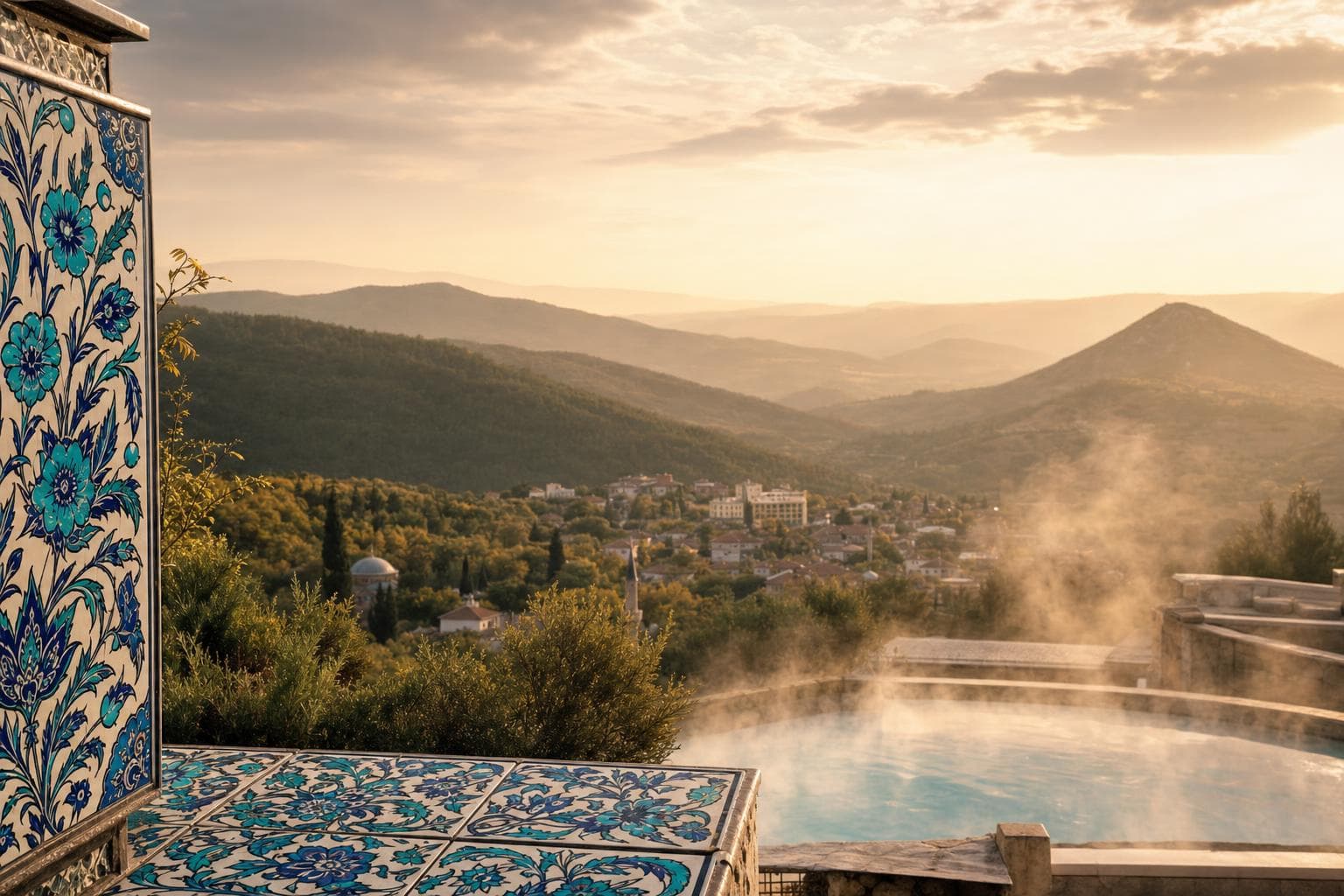
Kütahya — the art of tiles, open-air thermal pools and traditional hammam culture
Nature and History: The Phrygian Valley and Aizanoi
Kütahya’s appeal is not confined to the city centre. The ancient city of Aizanoi, in the Çavdarhisar district, is home to the best-preserved Temple of Zeus in the world; with its columns still standing, it is one of the most striking ancient structures in Anatolia, and because it is usually far less crowded than Ephesus or Pergamon, it can be explored in real peace. For nature lovers, the parts of the Phrygian Valley reaching into Kütahya offer rewarding hiking routes among fairy-chimney-like rock formations and ancient rock monuments. These are typically day trips; you can set out in the morning and return to your thermal hotel in the evening, enjoying both history and comfort in the same day.
Kütahya’s True Draw: The Thermal Waters
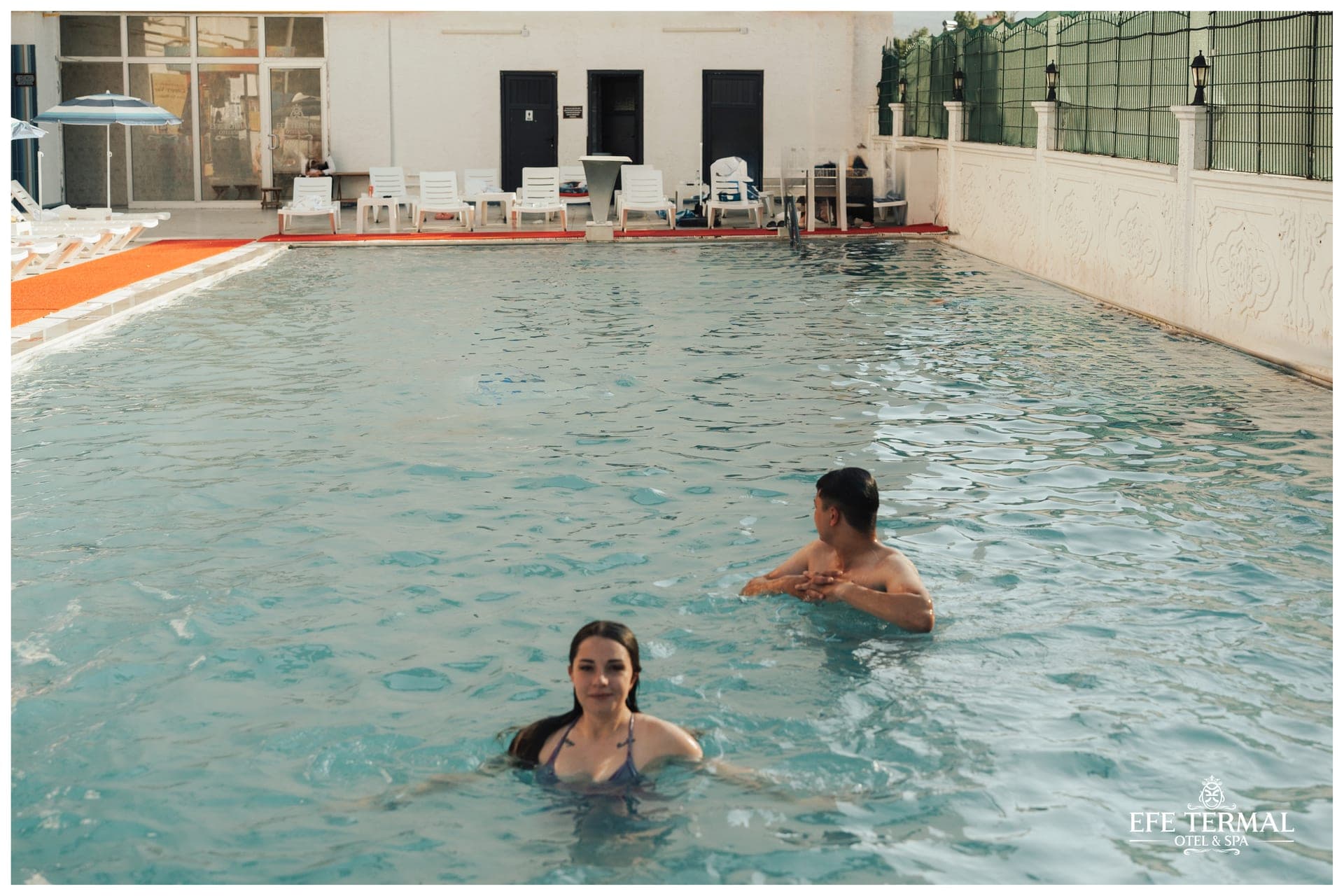
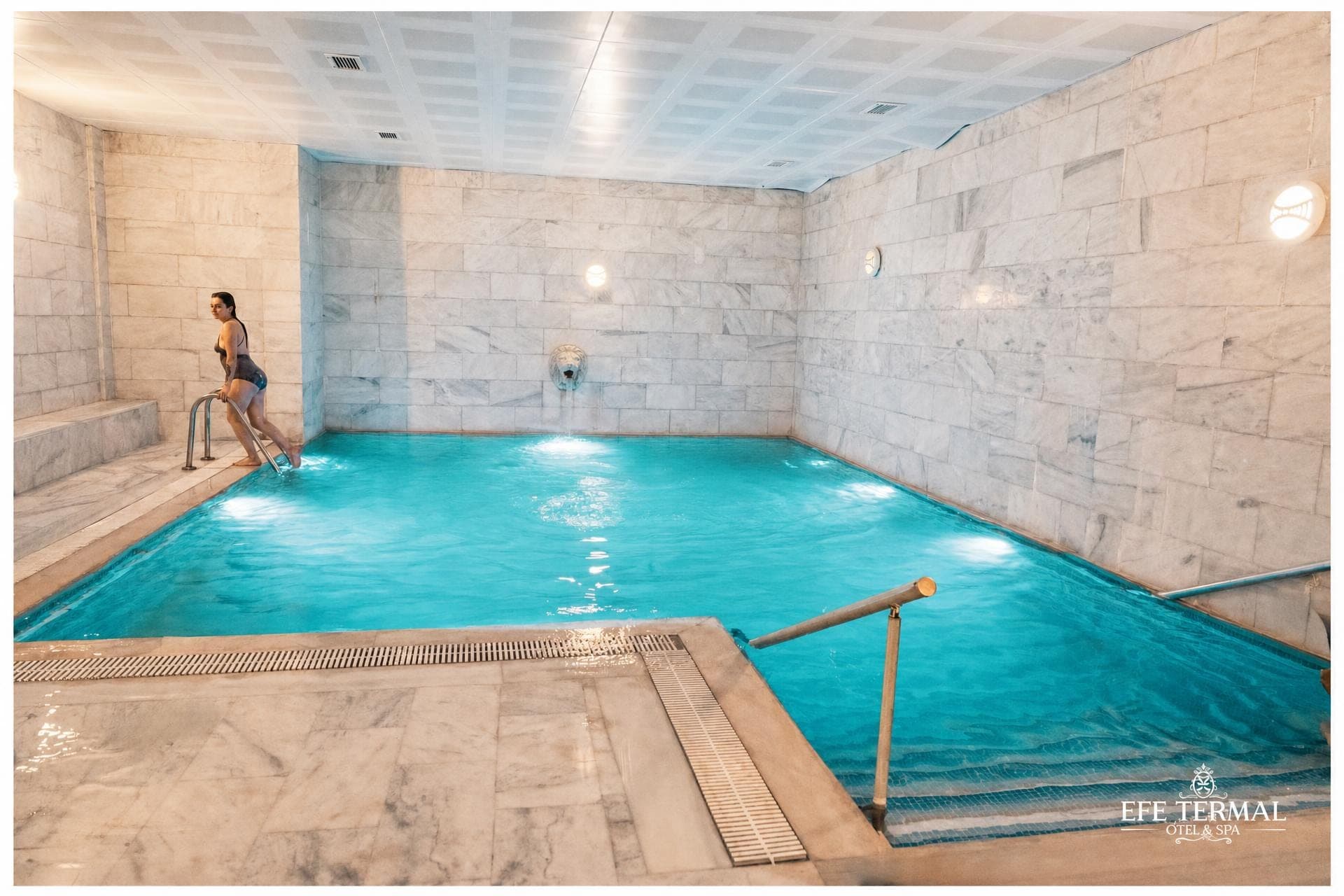
What has made Kütahya a place visited for centuries is the hot, mineral-rich water that rises from beneath the ground. Yoncalı, to the northwest of the city, has been a spa area sought for healing since Roman times; its water is traditionally favoured for rheumatism, musculoskeletal complaints and general renewal. Today the region’s modern thermal hotels combine this natural source with private-pool rooms, open and indoor thermal pools, the traditional Turkish hammam and spa services. So a thermal holiday in Kütahya is far more than an old spa experience — it means a luxurious rest for your body after all the history and natural beauty you have explored.
Where to Stay in Kütahya
While there are boutique hotels in the city centre, if the real reason for coming to Kütahya is the thermal water, it makes most sense to stay at one of the thermal resorts around Yoncalı. Efe Termal Otel sits right here, in Yoncalı: it offers rooms with private thermal pools, open and indoor thermal pools, an aquapark, a traditional hammam, doctor fish, and a spa staffed by Far-East-trained therapists. Families are drawn to the aquapark and spacious family suites, couples to the romantic private-pool rooms, and health-focused guests to the thermal water and medical massage. It is an ideal base for those who want to explore the city centre and sights like Aizanoi by day and return to the warm water in the evening.
When to Visit Kütahya
The beauty of a thermal holiday is that it makes sense in all four seasons. Winter is the classic thermal time, with the indescribable pleasure of slipping into steaming hot pools in the cold. Spring and autumn, with their mild weather, are perhaps the most balanced for combining city and nature trips — Aizanoi or the castle by day, the thermal pool by evening. In summer the aquapark and open pools are especially appealing for families with children, and the region’s highland coolness offers relief from the central Anatolian heat. Since religious holidays (bayram) and long weekends are the busiest periods, we recommend booking early for those dates.
What are the most important places to see in Kütahya?
The highlights of Kütahya are: Kütahya Castle and the historic city centre, the tile (çini) workshops and the Tile Museum, Germiyan Street with its restored Ottoman mansions, the ancient city of Aizanoi and its Temple of Zeus in Çavdarhisar, the rock formations of the Phrygian Valley, and the thermal spas around Yoncalı. The city offers history, nature and thermal tourism all at once.
How do you get to Kütahya?
Kütahya is most easily reached by road: about 3 hours from Ankara, 2.5 hours from Bursa, 4-5 hours from Istanbul and about 3.5 hours from Izmir. You can also take the high-speed train (YHT) to Eskişehir and continue by bus. Zafer Regional Airport offers limited flights. Since the thermal resorts are outside the city, coming by car is the most flexible option.
Is Kütahya good for a thermal holiday?
Yes, Kütahya is one of Turkey’s most established thermal regions. Yoncalı in particular has been known for its healing waters since Roman times. The region’s thermal hotels offer private-pool rooms, open and indoor thermal pools, traditional hammams and spa services. The water is traditionally favoured for rheumatism and musculoskeletal complaints, and it is also ideal for general rest and renewal.
Where should you stay in Kütahya?
To make the most of the thermal water, it is most sensible to stay at a thermal hotel around Yoncalı. Efe Termal Otel in Yoncalı offers rooms with private thermal pools, an aquapark, a traditional hammam, doctor fish and spa services, making it a convenient base for families, couples and health-focused guests. Boutique hotels are also available in the city centre.
When is the best time to visit Kütahya?
A thermal holiday suits all four seasons. Winter is the classic thermal time, with the pleasure of hot pools in the cold; spring and autumn are the most balanced for combining sightseeing and thermal; summer is appealing for families thanks to the aquapark and open pools. Since bayram holidays and long weekends are busy, early booking is recommended.
What is Kütahya tile (çini), and where can you buy it?
Çini is Kütahya’s centuries-old traditional craft — ceramic tiles and objects in shades of turquoise, cobalt blue and white, decorated with floral and geometric patterns. By buying genuine handmade pieces from the tile workshops in the city centre and around the Tile Museum, you can take home an authentic souvenir of Kütahya.